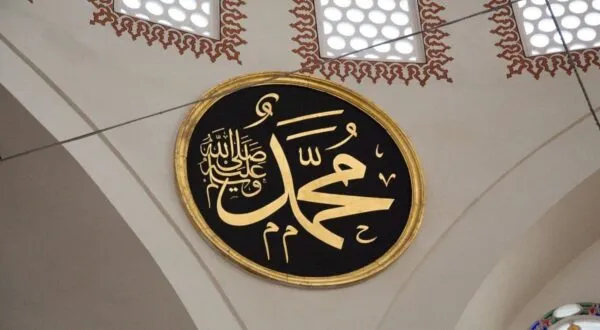
Women are often brought into the picture when discussing Islam because their status — if not studied thoroughly and objectively — is severely misunderstood. Under those inaccurate assumptions, Muhammad (peace and blessings be upon him) is often accused of practicing and encouraging unjust treatment of women, while the truth is actually the opposite — as I hope you will see after reading this answer.
I’m encouraged by your thoughtful, questioning nature to attempt to crystallize the true picture of this great man. Let’s take an objective peek into his life, to examine whether or not Muhammad (peace and blessings be upon him) is that repelling womanizer. But first let’s go a little further back in history to look at the domestic lives of other prophets preceding Muhammad and what their Scriptures tell us about their stance towards the polygamy issue:
Other Prophets Practiced Polygamy
The fact that only Muhammad is accused of polygamy is rather surprising, since this is a privilege enjoyed by prophets before him. Their wives and concubines came in great numbers, too! The Torah, the Bible, and the Qur’an tell of some of them; the rest are not mentioned so we don’t know, but among the ones who were polygamous we can count Prophets Ibrahim (Abraham), Ya`qub (Jacob), Dawud (David), and Sulayman (Solomon). The Scriptures talk of polygamy as a “favor” bestowed upon them from the Lord.
First Kings 11:1-3 indicates that King Solomon had 700 hundred wives and 300 hundred concubines! In sealing treaties in ancient days, it was customary for a lesser king to give his daughter in marriage to the greater king. Every time a new treaty was sealed, Solomon ended up with yet another wife. These wives were considered “tokens of friendship” and “sealed” the relationship between the two kings. (Reasoning from the Scriptures on 1 Kings)
Scripture indicates that David also acquired wives and concubines, David’s blessings, including his wives, were given to him as a result of God’s favor (2 Sam. 5:12-13; 12:8; D & C 132:39). Scriptural records say that the Lord did command some of his ancient saints to practice plural marriage. Abraham, Isaac, and Jacob—among others (D & C 132)—conformed to this ennobling and exalting principle; the whole history of ancient Israel was one in which plurality of wives was a divinely accepted and approved order of matrimony. Those who entered this order at the Lord’s command, and who kept the laws and conditions appertaining to it, have gained for themselves eternal exaltation in the highest heaven of the celestial world. (Mormon Doctrine of Plural Marriage p. 578)
Islam Didn’t Invent Polygamy but Only Regulated It—in Favor of Women!
From the above accounts, we can clearly see that Prophets—including Muhammad—were allowed to be more polygamous than their followers, not just for carnal reasons, but for political and religious reasons pertaining to their call. Consequently, it is groundless to wonder why Muslims can’t marry 12 wives like their prophet, just as it is groundless to wonder why Jews and Christians can’t marry 700 like theirs! Islam didn’t invent polygamy; Islam only made polygamy more humane, instituting equal rights for all wives. And even so, Muslim women are not forced to accept this and may put a condition against it in their marriage contract.
The Qur’an Is the Only Holy Book That Actually Says “Marry Only One”
Images of “sheikhs with harems” are not consistent with Islam, as, in fact, the general rule in Islam is monogamy not polygamy. the Qur’an says what means:
*{Marry women of your choice, two, or three, or four; but if ye fear that ye shall not be able to deal justly (with them), then only one.}* (An-Nisaa’ 3:3)
Polygamy in Islam is not recommended; it is only permitted under certain guidelines. Permission to practice polygamy is not associated with mere satisfaction of passion. It is, rather, associated with compassion toward widows and orphans.
Before the Qur’an was revealed, there was no upper limit for polygamy, and many men had more than four wives. Islam put an upper limit of four wives, permitting a man to marry more than once, only on the condition that he deal justly with all of them. Yet the same verse points out:
*{Ye are never able to be fair and just as between women}* (Al-Nisaa’ 3:129)
Therefore polygamy is not a rule but an exception.
Why Is the Exception of Polygamy Allowed in Islam?
The exception is made for many reasons, but let’s note only one here, addressing your concern that Muhammad (peace and blessings be upon him) “had intercourse outside of wedlock.”
In Western society, it is common for a man to have mistresses or multiple extra-marital affairs. Women in this case are degraded to mere sex objects with absolutely no rights; they’re usually on the losing end of such liaisons. The same society, however, cannot accept a man having more than one wife so that women can retain their lawful rights and lead an honorable, dignified, and respectable life.
If every adult American man married only one woman, there would still be more than 25 million women in the United States who would not be able to get husbands, at least considering that—according to latest statistics—10 percent of the American population is gay! That’s close to 30 million people!
Thus the only option for a woman who cannot find a husband is either to marry a married man or to become “public property.” Islam gives women the honorable position by permitting the first option and disallowing the second. At least one of the reasons Islam has permitted limited polygamy is to protect the modesty of women!
Islam’s Straightforward Approach in Problem Solving
In Islam, problems are supposed to be faced and solved—not ignored! So, rather than requiring hypocritical compliance, Islam provides legitimate and clean solutions to the problems of individuals and societies. There is no doubt that the second wife legally married and treated kindly is better off than a mistress without any legal rights. Through practical example, Prophet Muhammad as the guide of Muslims has set the applicable rules for this aspect of human relations in order not to leave anything for speculation.
Stages of the Prophet’s Married Life
First, let’s remember that Prophet Muhammad (peace and blessings be upon him) led a life supported only by the bare minimum of necessities. His wives were not idly wasting away the hours in a luxurious harem but led a life of labor and sacrifice, while he was mostly busy away from home overseeing his numerous duties as a Prophet. So, obviously, lust was not a factor, as he wasn’t even at home most of the time. Further, most of his marriages occurred at an age when lust is not a major factor in any man’s life:
1. He remained single until age 25.
2. From age 25 to 50 he was faithful to only one wife, Khadijah, who bore all his children except one. She was 15 years older than him, with children from two previous marriages. She was his greatest ally when he received the Call at age 40 until she died when he was 50 years old. He remained in love with her until he died and often talked of his life with her with great nostalgia.
3. Between ages 50 and 52 he remained unmarried and mourning his late beloved wife. He lived alone with his daughters.
4. Between ages 53 and 60 he married all his other wives for many noble reasons detailed below. It’s unimaginable for a man to suddenly turn lustful at this age, especially as he was constantly traveling, with bloodthirsty enemies on his heels.
5. At age 60, Allah revealed to him verse preventing him from marrying any more until he died, which was at age 63. The Qur’an says what means:
*{It is not lawful for you (to marry other) women after this, nor to change them for other wives.}* (Al-Ahzab 33:52)
Reasons for the Prophet’s Marriages
We can categorize all his marriages under two aspects of his personality:
– Muhammad the man who needed a loving wife, children, and a stable home, so he married Khadijah and remained with only her for 20 years until she died.
– Muhammad the Prophet who married the other wives for reasons pertaining to his duty to deliver the Message to the world. Those particular women were carefully selected, not just haphazardly “acquired” for carnal reasons, as suggested. Here are some of the reasons for which Muhammad married:
1. To pass on Islam to the next generations as a practical legacy
Prophet Muhammad is the only prophet without any privacy, and with a meticulously preserved tradition in speech and actions in all minute details of his public and private life. Preserved in the sharp minds of his wives and his Companions, those narrations comprise the “daily life manual” for Muslims to follow until the end of time. The fact that Islam was spread on the shoulders of women and preserved in their hearts is a great honor to the females of this Ummah. The books of authentic Hadith attribute more than 3,000 narrations and Prophetic traditions to his wives alone.
2. To cement the relations of the budding nation
In a tribal society, it was customary to seal treaties through marrying into tribes. Muhammad’s closest Companions later became the four caliphs who led Islam at the critical stage after his death. Two of them were the fathers of his wives `A’ishah (daughter of Abu Bakr) and Hafsa (daughter of `Umar); the other two married his daughters (`Uthman married Ruqayyah and Zainab in succession, and `Ali married Fatimah).
3. To teach Muslims compassion with women
He taught them to be compassionate not just to the young and beautiful maidens, but more so to the weak and destitute widows, divorcees, orphans, and elderly women. Islam teaches that women are to be respected, protected, and cared for by their men folk. They’re not to be cast out to face a harsh life alone while able men around them just pity them and do nothing to help, or worse, use their weakness to take them as mistresses!
4. To offer a practical role model to Muslims until the end of time
Although many believing women often approached Muhammad offering him themselves in marriage, he politely turned down their offers. Most of his wives after the death of Khadijah were old, devoid of beauty, and previously married, except `A’ishah, who was the only young virgin. He married from other nations and religions; some were the daughters of his worst enemies, and his marriage to one woman won all her people into Islam. Regardless of his neutral feelings towards many of them, he was a model example of equal justice and kindness to them all, and he would never discriminate among them.
Who Were the Prophet’s Wives?
Prophet Muhammad married 12 wives in his life. When he died he had 9 wives. They have a very special status in the hearts of Muslims as the “Mothers of the Believers,” as the Qur’an instructs, and they are the source of a great amount of wisdom which they learned while living close to such a great man. Perhaps you’d like to research a bit to find their beautiful stories, so here are their names: Khadijah bint Khuwaylid, Sawdah bint Zam’ah, `A’ishah bint Abi Bakr, Hafsah bint `Umar ibn Al-Khattab, Zaynab bint Khuzaymah, Umm Salama, Zaynab bint Jahsh, Juwayriah bint Al-Harith, Umm Habibah, Safiyah bint Huyay ibn Akhtab, Maymunah bint Al-Harith, Maria the Copt.
Can We Consider His Marriage to `A’ishah a Case of Child Molestation?
To answer your speculation, let’s continue our objective trip into the past. Obviously, when traveling back in time 1400 years to examine a lifestyle we never witnessed, it is unfair to apply our present day standards, so let’s listen to the experts. Authentic historical records prove that the social traditions of the time and place—regardless of religion—considered Arab females as women as soon as their menstrual cycles began. The custom was to give daughters in marriage at that age. This was practiced by all dwellers in Arabia before Islam: pagans, disbelievers, Jews, and others. It’s a fact that female menstruation in hot climates starts much earlier than in cold climates, so females in Arabia matured as early as 8 or 9; they also aged earlier than other women.
It’s a neglected fact that before she was married to Muhammad, `A’ishah had been engaged to an infidel, Jubair ibn Mus’ab ibn Ady. Her fiancé broke the engagement on the basis of religious difference. So her father, Abu Bakr, agreed to give her hand in marriage to the Prophet.
The Great Wisdom in Selecting `A’ishah in Particular as a Young Wife
`A’ishah (may Allah be pleased with her) came from a house famous for learning and memorizing great quantities of knowledge; her father was a live encyclopedia of Arab tribal pedigrees and poetry. She inherited his ability, and in her young, intelligent, receptive mind, she preserved a precious portion of Islam she learned during seven years of marriage, for 47 years after the death of the Prophet (peace and blessings be upon him) and she taught thousands of men worldwide their religion as she had learned it firsthand from the Prophet. To our present day, she is considered among the most prominent Islamic scholars, and she holds extremely high esteem in the hearts of all Muslims as such and as “the beloved of the Prophet,” who often mentioned her as the human he loved the most on the face of this earth. With her, he built a model Muslim home for Muslims to strive to imitate forever.
Was Maria the Copt a Slave, a Concubine, or a Wife of the Prophet?
Slavery already existed long before Islam. It was a system whereby a human captured in wars or kidnapped could be sold as a “possession.” That term applied to both sexes, not to women only. In some cultures slaves were considered subhuman and treated brutally. In Europe, for example, Romans threw Christian slaves to the lions while the public cheered; female slaves were thought to have no souls and were tortured mercilessly; slaves lived in degrading conditions; both sexes were forced to offer sexual favors to their masters; and as “possessions” they had no choice, no will, and no rights.
Islam recognized the human rights of slaves and encouraged Muslims to set slaves free. Islam prohibited adultery and homosexuality, and prevented forcing female slaves into sexual acts against their will. Islam encouraged educating them, setting them free, then legally marrying them and giving them their moral and financial rights. The reward for this—as mentioned in Prophetic Hadith—is eternal residence in Paradise.
Maria was not a concubine; she was a slave owned by Egypt’s Christian governor, who offered her and her sister Serine—among other presents—as a “gift of good will” to the Prophet in reply to his envoys inviting him to Islam. On her way from Egypt to Madinah, she was curious to learn about “her new master” and listened to his Companions talk about him. As a result, she became Muslim before meeting Muhammad. Scholars’ opinions vary of her status afterwards; here is the opinion I support:
One of the prominent Al-Azhar scholars, Sheikh Abdul Majid Subh, states:
“Prophet Muhammad (peace and blessings be upon him), instead of taking concubines, entered into lawful marriages based on reason and wisdom. Maria the Copt was given to him as a present, but rather than taking her as a concubine, the Prophet (peace and blessings be upon him) married her, thus elevating her status by marriage.”
Women’s Rights in Islam Surpass Modern Systems
If women in the Muslim World today don’t have their rights, it is not because Islam didn’t give them rights. Alien traditions have overshadowed the teachings of Islam, either through ignorance or the impact of colonialism. Most of the so-called modern reforms in the status of women appeared after the West abandoned religion for secularism. Those in the West who claim to follow the Judeo-Christian tradition really follow the values of Western liberalism.
In England and America less than fifty years ago, a woman could not buy a house or car without the co-signature of a male “guardian”! In Contrast, Islamic Law guaranteed rights to women over 1400 years ago that were unheard of in the West until the 1900s.
Numerous verses of the Qur’an state that men and women are equal in the site of Allah; the only thing that distinguishes people in His site is their level of God-consciousness.
Islam teaches that a woman is a full person under the law, and is the spiritual equal of a male. Women have the right to own property, to operate a business, and to receive equal pay for equal work. Women are allowed total control of their wealth. They cannot be married against their will, and they are allowed to keep their own name when married. They have the right to inherit property and to have their marriage dissolved in the case of neglect or mistreatment. Islam does not consider woman an “evil temptress,” and thus does not blame woman for Original Sin (a doctrine that Islam rejects). Women in Islam participate in all forms of worship that men participate in.
Prophet Muhammad’s mission stopped many of the horrible practices against women that were present in the society of his time. He actually harnessed the unrestricted polygamy of the Arabs of the time, and put many laws in place to protect the well-being of women. In his Farewell Sermon just weeks before his death, he summarized the teachings of Islam to the believers in a final farewell. His last words were “Be kind to women!”
