|
|
The exhibition's poster.
|
ROME — Amid rising
Islamophobia in the West, the Italian city of
Venice is playing host to an exhibition
celebrating Islam contribution to Western
civilization and arts
"The exhibition
highlights cross-fertilization between the
West and Islam to counter war mongering clichés
that now make international headlines,"
Marie George Nida, an exhibition organizer,
told IslamOnline.net Sunday, October 8.
Organized by the
Paris-based Arab World Institute (IMA) in
partnership with the Metropolitan Museum of
Art in New York, the exhibition, titled
"Venise et l'Orient", was
inaugurated in October 3 and will run through
February 18.
"The fair showcases
how the Islamic civilization has left its
indelible mark on the West in the Middle
Ages," added Nida.
Potteries, oil paintings,
carpets, coins, silver plates and wooden items
that were brought to Vince during the Middle
Ages stand as a poignant symbol of cultural
exchange between Europe and the Ottoman
Empire.
The fair comes as the West
and the Muslim world are experiencing some of
the worst periods of their relation in recent
history.
Pope Benedict XVI triggered
an international controversy by linking Islam
with violence by quoting a Byzantine emperor
at a lecture in his native Germany.
Danish state TV on Friday,
October 6, aired amateur video footage showing
a number of members of the youth wing of the
anti-immigrant Danish People's Party (DPP) at
a summer camp in August, drinking, singing and
engaging in a competition to draw humiliating
images of Prophet Muhammad (peace and
blessings be upon him).
In September last year
Danish daily Jyllands-Posten published
cartoons, including one showing the Prophet
Muhammad with a bomb in his turban, proving
Muslim condemnation from all the world over
and sparking protests early this year in which
more than 50 people died in Asia, Africa and
the Middle East.
Inspiration
The 250 objects on display
show how the Islamic civilization became a
source of inspiration for the Venetians.
A large section of the
exhibition shows how the Venetians were
inspired by the Mamelouks and Ottomans.
"It is obvious that
the art of oil painting, one of the Venetian
civilization's landmarks, was inspired by the
East," Nida said.
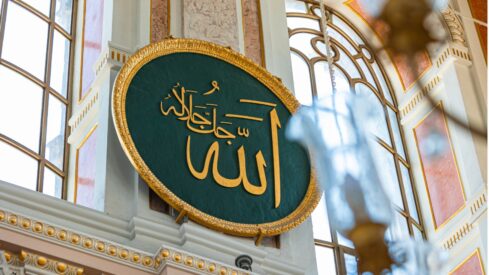
Qura'nic verses inscribed
on glass lamps and ceramic plates made in
Venice and sold in the East shows how
impressed Europe was by the Islamic
calligraphy.
The fair's logo is a
computerized photo of the masterpiece painting
of Venetian artist Gentile Bellini, showing
the Ottoman Sultan Mohammad II face-to-face
with the Venetian duke Giovanni Mocenigo.
As part of efforts to
recognize Islamic contribution to human
civilization, a new wing of Islamic art is to
be inaugurated in the Louvre museum in 2009.
The long-awaited section in
the world's largest museum will showcase up to
10,000 pieces, one of the greatest
concentrations of Islamic art in existence.
Saudi billionaire Prince
Al-Walid bin Talal has donated 17 million
euros to construct the section.
The New York-based
Metropolitan Museum of Arts and the British
Museum also have departments of Islamic art.