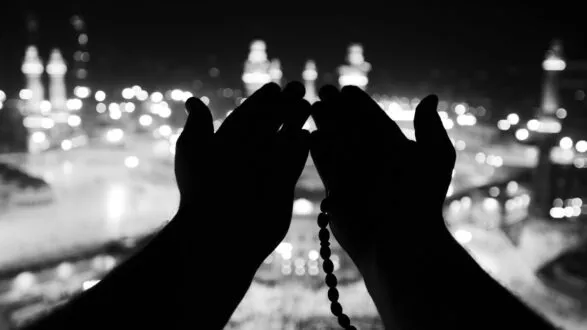
These ten days are among Allah’s graces granted to His servants as Allah created in the souls of the believers the longing to see the Holy Mosque in Makkah and no one can see it every year, He obligated Hajj on those who have the ability to perform it only once in their lifetime and He made the ten days a mutual occasion for both those who travel to Hajj and those who stay at home. Therefore, whoever is unable to perform Hajj one year, can do in those ten days what is even better than jihad – which is in turn better then Hajj – from their own home.
The Aggregation of Virtues
Among the virtues of the ten are days is the following:
- That Almighty Allah swore upon them when He says (By the Dawn and ten nights.) (Al-Fajr 89:1-2) and the majority of interpreters of the Qur`an say that it refers to the ten days of the Dhul-Hijjah.
- That they are part of the forty days of solitude which Almighty Allah appointed for Prophet Moses (peace and blessings be upon him), (And when We did appoint for Moses thirty nights (of solitude), and added to them ten) (Al-A`raf 7: 142)
- That they are the end of the months of Hajj: Shawwal, Dhul-Qi`dah , and the ten days of Dhul-Hijjah. Almighty Allah says, (The pilgrimage is (in) the well-known months) (Al-Baqarah 2: 197)
- That they are among the well-known days in which Almighty Allah ordained the worship of remembrance and thankfulness for His grace of sending cattle, (And proclaim unto mankind the pilgrimage. They will come unto thee on foot and on every lean camel; they will come from every deep ravine. That they may witness things that are of benefit to them, and mention the name of Allah on appointed days over the beast of cattle that He has bestowed upon them) (Al-Hajj 22: 27-28) and the majority of interpreters say that the known days are the ten days of Dhul-Hijjah.
- That they include the two days of `Arafah (the ninth of Dhul Hijjah) and An-Nahr (the day of slaughtering sacrificial animals) that are among the greatest days in Islam. According to this hadith: “The best days to Allah are the day of An-Nahr then the day of An-Nafr (the 11th day of Dhul-Hijjah)” (Authenticated by Al-Albani)
- That the five pillars of Islam do not occur together except in those days. Ibn Hajar says: “Apparently the reason for the supremacy of the ten days of Dhul-Hijjah is that they gather all the major forms of worship, i.e. prayer, fasting, almsgiving, and pilgrimage; this is something that does not occur during any other days.”
Hasten to Perform Hajj
If the ten days are so highly ranked, then it is a duty to reap their benefits with diligence and ardent efforts.
When these ten days came, Ibn Abbas used to exert unprecedented efforts that he was barely able to exert and he used to say: “Do not blow out the lanterns in the ten days because of liking worship.” .
The best act of worship in these ten days is performing pilgrimage to the Holy Mosque in Makkah. This is a form of worship from which people emerge pure, clear and free from sins just like the day they were born.
It is a most hideous thing for a person who has not performed Hajj to plan spending these days in anything other than Hajj while they have the ability to. Prophet Muhammad (peace and blessings be upon him) said: “Whoever wants to perform Hajj, let them hasten to do so, as they may fall ill, lose their riding animal and the need may arise” (Authenticated by Al-Albani) Also, he said (peace and blessings be upon him): “Hasten to Hajj because none of you knows what may arise,” (Authenticated by Al-Albani)
Said Ibn Al-Masayyib narrated thatUmar said: “I was on the point of sending men to these countries to see who has wealth and has not performed Hajj to make them pay the jizyah. They are not Muslims! They are not Muslims!” According to Al-Bayhaqy there is another narration where jizyah Umar said: “Let him die Jewish or Christian (Umar said that three times) the man who dies without performing Hajj despite having the financial ability and the unobstructed way.
Therefore, we should be most careful in avoiding delay with unacceptable excuses.
Hasten to Good Deeds
Then there are other types of worship that are preferable to increase in these days like:
1- Remembrance of Almighty Allah as in the hadith narrated by Imam Ahmad: “There are no days greater to Allah nor more loved to do good deeds in them than in these ten days, so say the tahlil and takbir and tahmid a lot in them.
Tahlil is saying la ilaha illa Allah, i.e. None has the right to be worshiped except Allah; Takbir is saying Allahu Akbar, i.e Allah is the greatest; Tahmid is saying al-hamdu lillah, i.e. All praise be to Allah.
It is preferable in these days to do muqayyad or restricted takbir (After obligatory Prayers) and mutlaq or unrestricted takbir (performed every where at any time). So men can say the unrestricted takbir aloud since the first day of Dhul-Hijjah in the alleys, the streets, and the markets. They can also make restricted takbir following the Prayers starting from the day of `Arafah for those who are not performing Hajj. As for those who are performing Hajj, they say the takbir from the day of Al-Nahr to the end of At-Tashriq (the three days after the day of An-Nahr) days.
Abu Hurairah and Abdullah ibnUmar used to go to the market in the ten days and do takbir and people would join them, and they would go for no reason but this.
2- Fasting: Abu Dawud narrated from some of the wives of the Prophet (peace and blessings be upon him) that he used to fast the nine days of Dhul-Hijjah, the day of Ashura, three days every month, the first Monday of the month and on Thursdays. He used to encourage the fast of the day ofArafah saying (peace and blessings be upon him): “Fasting the day of `Arafah I seek from Allah to make it expiate the sins of the year before and the year after” (Ibn Majah)
3- Night Prayer: This prayer falls within the established acts of worship in these blessed days. Sa`id Ibn Jubair used to exert utmost efforts in these days that he could barely keep up.
4- Blood Sacrifice: This refers to the animals that are slaughtered on the days of nahr to seek closeness to Almighty Allah. It is a sunnah or a tradition established in every religion. Almighty Allah says: (To every people did We appoint rites (of sacrifice), that they might celebrate the name of Allah over the sustenance He gave them from animals (fit for food),) (Al-Hajj 22:34). It is also a confirmed sunnah and so it is reprehensible for someone who is financially able to perform it, to leave it because Almighty Allah linked it to Prayer in the verse: (Therefore pray to your Lord and make a sacrifice.) ( Al-Kawthar 108:2). Also, slaughter is better than giving its worth in money as charity. The Prophet (peace and blessings be upon him) sacrificed two graceful, horned sheep, one on behalf of his household and another for those who did not sacrifice anything among his nation. Moreover, it is up to people to sacrifice on behalf of whoever they want; whether alive or dead.
It is a condition that the sacrificed animal be from cattle (camels, cows, sheep, and goats), to be in the permissible age in Shariah (five years for camels, two years for cows, one year for goats, and six months for sheep), to be safe from preventing defects (like being one-eyed or lame), and to be slaughtered after theEid prayer. This is according to the hadith: “Whoever slaughters -the animal- before prayer should slaughter another in its stead” (Al-Bukhari and Muslim)
One sheep is sufficient for a person and his family and whoever that person wants on condition that the owner is one and the partnership is rewarded. Partnership in possession does not apply for sheep and there must be one owner only. However, camels and cows can be divided among up to seven persons.
Surely, slaughtering the sacrificed animal is better than giving its worth in money and even more as charity because the slaughter and bloodshed is intended in itself and is an act of worship associated with Prayer.
The prophetic tradition for those who sacrifice is to divide the slaughtered animal into three parts: to eat one third, give one third as charity, and to give one third as gifts.
It is prohibited for those who wish to make a sacrifice to cut any of their hair, nails, or skin from the beginning of Dhul-Hijjah. The evidence is what the Prophet (peace and blessings be upon him) said: “If the ten days start, and one of you wants to make a sacrifice, they should not take anything from their hair or skin.” (Ibn Majah). The reason for this is to resemble those in ihram who are performing Hajj.
The apparent meaning is that prohibition concerns the person who will sacrifice. In this way, if the head of a family is sacrificing on behalf of his family, it is only prohibited for him to do any of the above, but the rest of the family are not prohibited to cut any of their hair or nails because the Prophet (peace and blessings be upon him) made it conditional for the person who will sacrifice. Moreover, the Prophet (peace and blessings be upon him) sacrificed on behalf of his household and it was never reported that he prevented them from cutting their hair or nails.
** Adel Bin Ahmed Bana`ima is a lecturer at the University of Umm Al-Qura and the editor-in-chief of Jusoor magazine.
